
Opening a perfume store involves a long list of decisions – from choosing a location and selecting the brands you want to carry to creating an experience that brings customers through the door.
But there is another part of the planning process that’s easy to overlook: how the business will actually operate once those doors open.
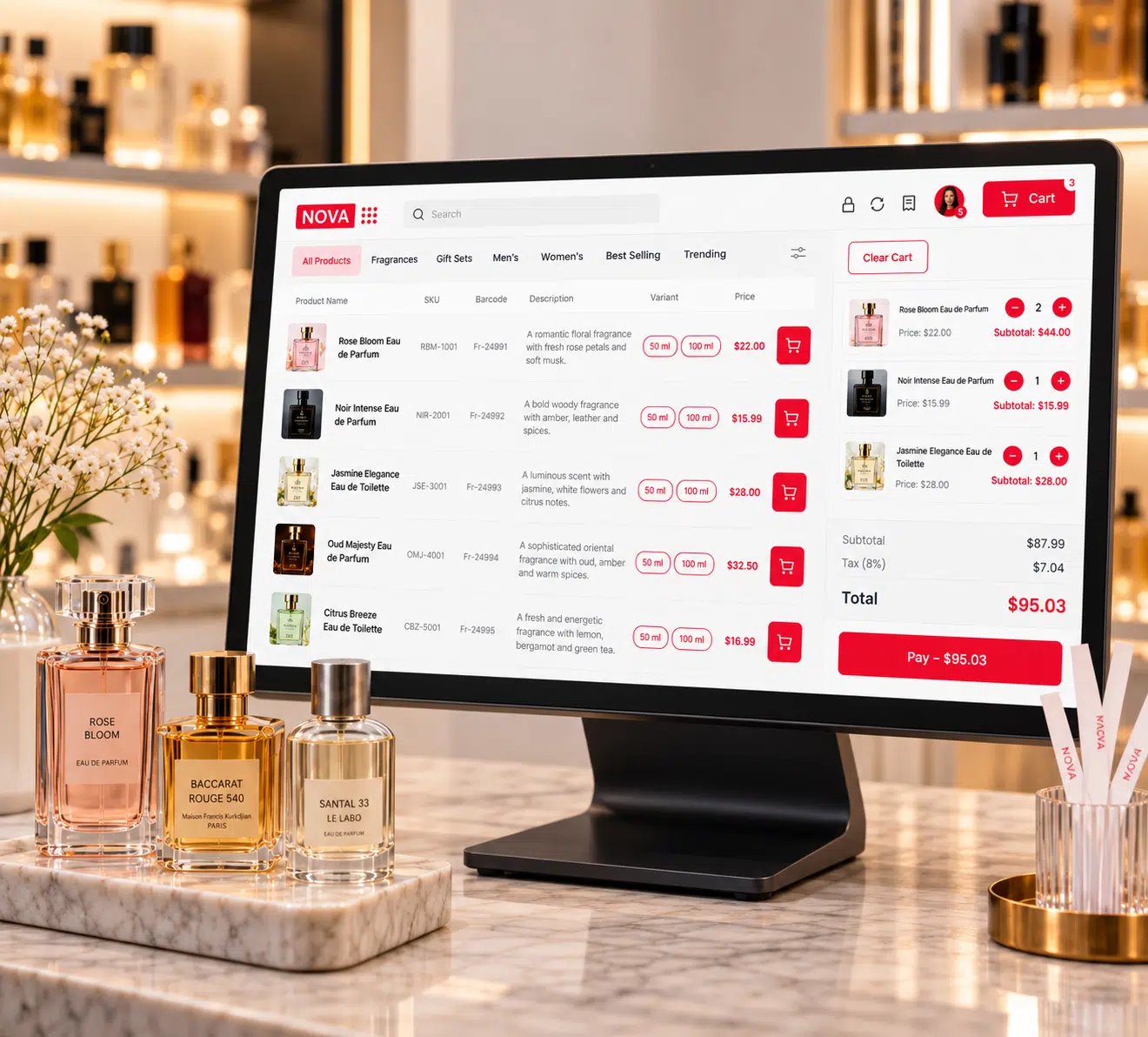
How will you manage hundreds or thousands of fragrance SKUs? How will you distinguish testers from products available for sale? Will you be able to see which bottle sizes are moving fastest? How will your team access a returning customer’s purchase history when they’re looking for their next fragrance?
These operational decisions may not be the most exciting part of opening a perfume store, but getting them right from the beginning can make the business much easier to manage as you grow.
That’s where NOVA has experience.
We work with specialty fragrance retailers on the technology and retail management side of the business. So rather than tell you how to negotiate a lease or which fragrance brands to carry, we’re focusing on what we know: the systems, processes, and information you’ll want in place to run your store effectively from day one.
Plan for a Larger Product Catalog Than You May Expect
Perfume retailers often carry a large number of brands, with each brand bringing its own fragrances, bottle sizes, concentrations, gift sets, travel sizes, and other product variations.
A single fragrance can quickly become several individual SKUs, each with its own price, inventory level, and sales performance. Across a large fragrance catalog, that can translate into hundreds – or even thousands – of SKUs to manage.
The complexity can grow further when vendors introduce new SKUs or update product pricing.

Without a clear process for managing those changes, duplicate products can be created, older pricing can remain attached to inventory, and employees may have difficulty knowing they’re selling the right product at the right price.
Setting up your product catalog correctly from the beginning also gives you better information for making inventory and purchasing decisions. You should be able to answer questions such as:
- Which bottle sizes are selling most often?
- Which products need to be reordered?
- How are gift sets performing compared with individual bottles?
- Which brands and fragrances are moving – and which are sitting on the shelf?
Before opening your store, think carefully about how products will be structured in your POS and how your team will handle vendor updates, price changes, and new SKUs.
A well-organized product catalog from the beginning can make inventory easier to manage and give you better visibility into what’s actually driving sales as your assortment grows.
Determine How You'll Manage Testers From the Beginning
Testers are an important part of the fragrance shopping experience, but they aren’t the same as inventory available for sale.
Establishing a clear way to distinguish testers from sellable products can help keep inventory counts more accurate and give your team better visibility into what’s actually available for customers to purchase.
When testers and sellable products are clearly distinguished, associates can see what’s truly available for purchase without a floor tester making inventory appear higher than it is.
Before opening, think through how testers will be entered into your system, how replacements will be handled, and how your team will account for bottles being used on the sales floor.
It’s a relatively small decision during setup that can make day-to-day inventory management much clearer once the store gets busy.
Make the Next Fragrance Recommendation More Personal
Fragrance is often a consultative sale.
A returning customer may be looking for the fragrance they purchased six months ago, something similar to a previous favorite, or something completely new that still fits their preferences.
Having customer purchase history readily available gives associates a better starting point for those conversations.
Instead of asking a customer to remember the exact name, bottle, or size they purchased last time, your team can quickly reference previous purchases and provide more informed recommendations.
That kind of continuity can help associates deliver a more personalized shopping experience while building stronger relationships with returning customers.
Know What's Actually Selling - Not Just What's Getting Attention
Fragrance trends can move quickly.
A scent may be getting attention on TikTok or Instagram, but what’s generating buzz online isn’t necessarily what’s driving sales in your store.
Having access to your own sales data helps you understand what your customers are actually buying.

Which fragrances are your best sellers? Which brands are gaining momentum? Which bottle sizes move most often? What’s slowing down? Are certain products performing differently across locations?
That visibility gives you a clearer picture of what’s driving the business, so merchandising and purchasing decisions can be based on your customers’ actual buying behavior – not trends alone.
Build Inventory Processes That Can Keep Up With Your Business
Your perfume inventory won’t stay static once the initial products are entered into your system.
New shipments arrive. Vendors change pricing. Products are returned or damaged. Inventory counts need to be reconciled. And as the business grows, products may need to move between locations.
Before opening, determine how your team will handle everyday inventory activities such as receiving new products, updating prices, processing returns and exchanges, accounting for damaged merchandise, transferring inventory between locations, and performing physical counts.
Clear processes and consistent employee training around those processes can help keep inventory information accurate as the business gets busier.
Inventory needs can also change throughout the year. Holiday gifting, gift sets, promotions, new releases, and seasonal fragrance trends can influence what customers are buying and how quickly certain products move.
Accurate inventory and real-time reporting can help you respond while that demand is happening: monitoring what’s selling, identifying products that are running low, and making more informed replenishment decisions.
Make Employee Training Part of Your Opening Plan
Your team will already have a lot to learn before opening day – from the fragrances and brands you carry to store policies and the customer experience you want to deliver.
The technology they use every day shouldn’t make that learning curve harder.
Consider how quickly new employees can learn the POS, find products, check inventory, access customer purchase history, process transactions, and complete common tasks such as returns or exchanges.
Training shouldn’t stop after opening week, either.
As new employees join the business, having a consistent onboarding process can help everyone use the system the same way and reduce the likelihood of inventory or transaction errors caused by inconsistent processes.
When evaluating a POS, don’t only think about what the system can do. Consider how easily the people running your store every day will actually be able to use it.
Choose a Retail Platform That Can Grow With Your Perfume Business
The POS you choose will become part of nearly every aspect of your store – from processing transactions and managing inventory to understanding sales performance and building customer relationships.
So think beyond what you’ll need at checkout on opening day.
Consider how the platform will support the way you want to manage the business as it grows. Can you control employee permissions? Track performance? Structure commissions? Access reports when you’re away from the store? Manage payments and inventory from one system? Add another location without creating an entirely separate operation?
Employee management is another consideration. Beyond permissions and performance tracking, flexible commission structures can give managers additional ways to motivate their teams.
For example, if a particular fragrance needs additional attention, a product-specific commission can provide an added incentive for associates to introduce it to customers.
The goal isn’t to choose technology based only on what you need today. It’s to put systems in place that can support the way you want to operate tomorrow.
NOVA POS brings these tools together in one connected retail management platform built for specialty retailers.

From managing complex fragrance inventory and customer purchase history to employee management, customizable commissions, reporting, integrated payments, and multi-location visibility, NOVA helps retailers manage more of their business from one place.
And when questions come up, NOVA customers have access to live retail support from people they can speak with directly – not just a ticketing system or an automated response.
Get the Operational Foundation Right
Opening a perfume store is exciting, and there’s plenty to think about before the first customer walks through the door.
The operational side may not be what inspired you to open the business, but the systems you put in place early can have a lasting impact on how efficiently you’re able to manage it.
Start with the areas that become harder to fix later: how products and SKUs are structured, how testers are managed, how employees are trained, how customer information is accessed, and how inventory and sales performance are monitored.
And if your store is already up and running, it’s never too late to take a closer look at those same areas. As your product catalog, customer base, team, or number of locations grows, the systems that worked when you started may no longer give you the visibility or flexibility you need today.
Whether you’re preparing to open your doors or looking for a better way to manage an established fragrance business, the goal is the same: build an operational foundation that can adapt as your business grows.
Planning a new perfume store or rethinking how you're managing the one you already have?
See how NOVA helps fragrance retailers manage the business behind the counter.